

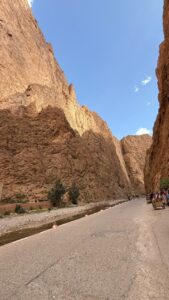
Geographically, Ouarzazate occupies a precise hinge point in Morocco’s landscape. It sits in the valley of the Ouarzazate River, near its confluence with the Draa, on the southern flank of the High Atlas . To the north and west, the mountains; to the south and east, the beginning of the pre-Saharan plains that eventually become the Sahara proper.
The sites around Ouarzazate fall into two broad categories: cinematic and historical landmarks within easy reach of the city, and the start of the natural and cultural landscapes that extend south toward the Sahara. Here are the essentials.
🏯
Kasbah Taourirt
19th-century Glaoui fortress, in the city
~1-2 hrs
🎬
Atlas Film Studios
World’s largest studio by area
~1.5-2 hrs
🏛️
Aït Benhaddou
UNESCO ksar, 30 km away
Half day
🌴
Fint Oasis
Palm valley, short drive south
Half day
🌊
El Mansour Eddahbi Dam
Reservoir & desert views
~1 hr
🌹
Draa Valley & Beyond
Palm oases toward Zagora
Full day+
Kasbah Taourirt is the city’s most significant historic monument: a sprawling earthen fortress of towers, courtyards, and narrow connecting passageways that once served as the residence and administrative seat of the Glaoui family. Walking through Taourirt feels like moving through a small fortified town in itself — staircases lead to rooftop terraces with panoramic views over Ouarzazate and, on clear days, the snow-dusted High Atlas beyond.
For photographers, the rooftop at sunset is the standout: warm light raking across the kasbah’s decorative towers, with the Atlas peaks as a backdrop.
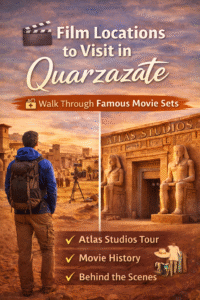
A few kilometres outside the city, Atlas Film Studios opens its sets to visitors for guided tours — a genuinely surreal experience that mixes ancient Egyptian temples, medieval fortress walls, and Tibetan monastery facades, all standing within walking distance of each other, all built from plaster, wood, and paint rather than stone.
Thirty kilometres from Ouarzazate, Aït Benhaddou is the single most photographed earthen structure in Morocco — a fortified village (ksar) of stacked clay-and-straw houses, towers, and defensive walls rising dramatically from a hillside above a riverbed.
Climbing through the ksar’s narrow lanes to the ruined agadir (fortified granary) at its summit takes 30-45 minutes and rewards visitors with sweeping views over the valley. The single most valuable piece of practical advice for Aït Benhaddou: visit at dawn or late afternoon.
For a quieter, less-visited alternative, the Fint Oasis lies a short drive south of Ouarzazate — a narrow palm-filled valley with small Berber villages, irrigation channels, and walking trails that see only a fraction of Aït Benhaddou’s visitor numbers.
Ouarzazate’s real strength is as a base — the point from which the rest of southern Morocco’s most celebrated landscapes become accessible. Two routes define most onward journeys:
Heading northeast from Ouarzazate, the so-called “Route of a Thousand Kasbahs” passes through the Skoura Oasis before continuing to the Valley of Roses around El Kelaa M’Gouna (spectacular during the rose harvest in late April and early May) and the dramatic Dades and Todra Gorges, where rivers have carved deep canyons through the rock over millennia.
Heading south, the road follows the Draa Valley — one of Morocco’s longest and most extensive palm groves, stretching roughly 200 kilometres toward Zagora and, eventually, the remote dunes of Erg Chigaga near M’Hamid.
Alternatively, the route east toward Merzouga and Erg Chebbi — Morocco’s most famous dunes — takes approximately 4 hours, typically via Skoura, the Dades Valley, and the Tinghir/Todra area, making Ouarzazate a natural first overnight stop on a multi-day Sahara journey from Marrakech.
How much time Ouarzazate deserves depends entirely on how it fits into your broader Morocco route. Below are three common approaches.
Arrival — Ouarzazate City
Arrive via the Tizi n’Tichka pass from Marrakech (4-5 hours). Settle in, then visit Kasbah Taourirt in the late afternoon for sunset light on the rooftop terraces. Evening walk through the city centre.
Atlas Film Studios & Aït Benhaddou
Morning visit to Atlas Film Studios before the heat builds. Afternoon excursion to Aït Benhaddou (30 km) — explore the ksar, climb to the agadir for valley views, and stay overnight at a guesthouse facing the ksar for a sunrise visit the following morning.
Sunrise at Aït Benhaddou → Onward
Early sunrise visit to Aït Benhaddou before the day-trip crowds arrive. From here, choose your onward route: northeast toward Skoura, the Valley of Roses, and the Dades/Todra Gorges, or south along the Draa Valley toward Zagora and Erg Chigaga.
Optional: Toward the Sahara
From Ouarzazate, both major dune systems are within reach: Erg Chebbi near Merzouga (~4 hours via Skoura and the Dades Valley) or the more remote Erg Chigaga near M’Hamid (~5-6 hours via the Draa Valley and Zagora). Either route makes for a natural continuation of a Ouarzazate-based itinerary into a full Sahara experience.
From Marrakech: 4-5 hours by car via the Tizi n’Tichka pass — itself one of the most scenic drives in Morocco. Supratours and CTM buses also connect Ouarzazate to major cities.
Where to Stay
Options range from simple guesthouses and riads near the centre to mid-range kasbah-style hotels with pools, and luxury desert resorts with mountain and oasis views. For Aït Benhaddou, staying at a guesthouse directly facing the ksar is highly recommended.
Local Cuisine
The region is known for tangia (slow-cooked lamb in a sealed clay pot), madfouna (a Berber-style stuffed flatbread sometimes called “Berber pizza”), dates from the Draa Valley, and almond-based sweets. Mint tea here tends to be served sweeter than in northern Morocco.
Best Light for Photography
Early morning and late afternoon offer the warmest light and most dramatic shadows across the kasbahs and film sets. Midday light tends to be harsh and flat — plan major photography around the golden hours wherever possible.
Ouarzazate sits on the southern side of the High Atlas Mountains, at the point where the mountain landscapes give way to the pre-Saharan plains and the Draa Valley.
The most common route is by road over the Tizi n’Tichka mountain pass, which takes approximately 4 to 5 hours by private vehicle. The drive itself is one of the highlights of the journey, with dramatic switchbacks, Berber villages, and panoramic Atlas views.
Aït Benhaddou is approximately 30 kilometres from Ouarzazate, about 30 to 45 minutes by car. It is most often visited as a half-day excursion, but staying overnight at a guesthouse beside the ksar allows visitors to experience it at sunrise and sunset, when the earthen walls glow most dramatically and the day-trip crowds have departed.
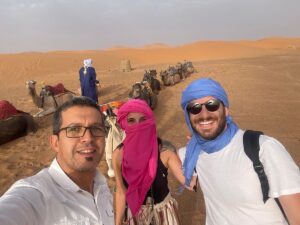
Yes. Ouarzazate is the standard starting point for both major Saharan dune systems in Morocco: Erg Chebbi near Merzouga (approximately 4 hours east) and the more remote Erg Chigaga near M’Hamid (approximately 5-6 hours south via Zagora). Multi-day tours typically combine an overnight desert camp with camel trekking and a route through the Draa Valley or Dades Gorge.
Spring (March to May) and autumn (September to November) offer the most pleasant temperatures for sightseeing and desert excursions. Summer (June to August) can exceed 40°C and is best suited to early morning and late afternoon activities. Winter (December to February) brings cool, often cold nights but clear skies and comfortable daytime temperatures — and occasional snow on the surrounding Atlas peaks visible from the city.
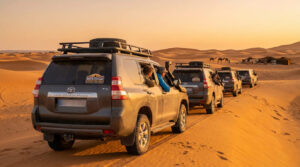
Mejor tour 4×4 Merzouga
Whether you want a focused Ouarzazate stopover or a full multi-day journey into the Draa Valley and the dunes of Erg Chebbi or Erg Chigaga, Ergaventure designs the route around you.
Feel free to ask us any questions.
 +212 661-414956