

Standing amidst the vast dunes of the Sahara Desert in Morocco truly feels like stepping into another world. The profound silence is unforgettable—only the wind shaping the endless golden dunes reaching toward the horizon. Throughout the day, the desert transforms its colors: soft pink at sunrise, blazing gold at noon, and deep orange at sunset. It’s as if nature is putting on a private performance just for you(Sahara in Morocco Guide).
For those seeking an experience that feels raw, authentic, and deeply grounding, the Moroccan Sahara offers something that no resort vacation can match.
When you visit, you’re not just seeing sand dunes; you’re stepping into a living heritage. Music played around a campfire, traditional mint tea ceremonies, and handmade crafts all add layers to the experience.
Hospitality in the desert is serious business. You’re welcomed like family. Conversations feel genuine, unhurried. It’s a reminder that adventure isn’t just about landscapes—it’s about people.
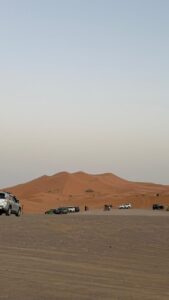
When travelers mention visiting the Sahara in Morocco, they’re often referring to the dunes near Merzouga, a small village situated on the edge of the vast Erg Chebbi dunes. These towering dunes can reach up to 150 meters high, creating the iconic rolling-sand landscape frequently seen in travel photography.
Other common access points include routes from Marrakech and Fes, both offering multi-day tours that traverse mountains, valleys, and historic kasbahs before arriving at the desert.
The journey itself becomes part of the adventure—crossing the High Atlas Mountains, passing palm-filled oases, and driving through dramatic rock formations, until finally the first golden dunes appear on the horizon.
Not all deserts are composed of sand dunes. In Morocco, two key terms distinguish desert types: erg and hamada. An erg refers to vast fields of sand dunes, like the famous Erg Chebbi. In contrast, a hamada describes rocky desert terrain, characterized by barren, stony plains.
Most travelers seek out ergs because they provide that classic, cinematic desert landscape many imagine—rolling sand dunes perfect for camel rides at sunset.
Understanding this distinction helps you choose the right tour. If your dream is to experience camel rides over tall, golden dunes as the sun sets, you’ll want to visit an erg region.
Timing is crucial when visiting the Sahara. Summer temperatures can soar above 45°C (113°F), making daytime exploration very challenging and intense. The best times to visit are spring (March–May) and autumn (September–November), when daytime temperatures are warm yet manageable, and nights are cool but not freezing.
Winter (December–February) brings surprisingly cold nights, sometimes near freezing, though daytime temperatures remain comfortable for outdoor activities. Planning your trip during these seasons ensures a more enjoyable and safer desert experience.
A popular route starts in Marrakech and takes about 2–3 days by guided tour or private car. Along the way, you pass through mountain passes and cinematic desert towns like Ouarzazate.
Tours from Fes typically take 2–3 days as well, offering a slightly different landscape route. Many travelers combine both cities into one loop, entering through one and exiting through the other.
Public transportation exists but is less convenient. For first-time visitors, organized tours simplify logistics and include accommodation, meals, and guided experiences.

Luxury camps offer private tents with real beds, ensuite bathrooms, and gourmet Moroccan dinners. Some even provide hot showers and solar-powered electricity. If you want comfort without sacrificing authenticity, this is the best option.
Expect plush carpets, lantern-lit walkways, and traditional live music under the stars.
Budget camps offer shared bathrooms and simpler tents but still provide the full desert atmosphere. The difference lies mostly in amenities, not in experience quality. Even modest camps deliver unforgettable sunsets and magical stargazing.
Camel trekking usually lasts 1–2 hours into the dunes. Riding a camel feels unusual at first—like balancing on a moving wave. But once you find your rhythm, it becomes peaceful and almost meditative.
Sunset rides are especially popular. Watching the sun dip below endless dunes creates a moment that feels almost unreal.
At night, the desert transforms. With minimal light pollution, the Milky Way becomes visible to the naked eye. Sitting around a fire while listening to traditional drumming is often the highlight of the trip.
The silence is powerful. You can hear your own breath, the shifting sand, distant wind.
Packing correctly can make or break your trip. Essentials include:
Loose, breathable clothing
A scarf or turban for sand protection
Sunglasses and sunscreen
Closed shoes for walking on hot sand
A warm jacket for nighttime
The desert has dramatic temperature swings. Layers are your best friend.
The Moroccan Sahara is generally safe for tourists, especially when traveling with reputable guides. Still, preparation matters. Drink plenty of water. Follow your guide’s instructions. Avoid wandering alone at night without orientation.
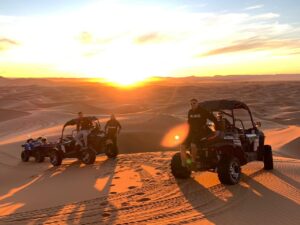
While camel trekking is iconic, it’s not the only option. Many camps offer:
4×4 dune excursions
Quad biking
Traditional cooking workshops
Adventure levels vary, so choose activities that match your comfort level.
At least 2–3 days from Marrakech or Fes to fully experience the journey and overnight stay.
Yes, guides assist throughout the trek, and camels are trained for tourism.
Yes, but organized tours simplify logistics and improve safety.
They range from basic to luxury. Even budget camps provide essential comfort.
Yes, many tours accommodate families, but extreme summer heat should be avoided.
Feel free to ask us any questions.
 +212 661-414956