

Spending a night in the Sahara Desert may sound simple—sleep in a tent, watch the stars—but it often becomes one of the most memorable parts of any Morocco itinerary(Sahara Overnight Camp).
If you’re planning a trip and considering a desert bivouac, this guide walks you through the entire experience—from arriving in Merzouga to watching the sunrise over Erg Chebbi.
.
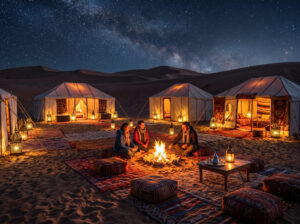
A bivouac is a local term for a desert camp, typically a group of Berber-style tents set up among dunes, run by local families or tour operators. Camps vary from simple, traditional setups with shared bathrooms to luxury tents featuring private en-suite facilities, air conditioning, and electricity.
Travelers usually access these camps through Merzouga or M’Hamid, gateways to the desert.
Most Sahara overnight trips begin with a road journey from Marrakech, Fes, or Ouarzazate, often crossing notable landmarks like the Atlas Mountains, Dades or Todra Gorges, and the Ziz or Drâa Valleys. This journey offers changing landscapes adding richness to the Sahara experience.
Upon reaching Merzouga or M’Hamid, travelers usually leave their vehicles in secure parking and proceed into the dunes by camel or 4×4, depending on the tour package and camp location.
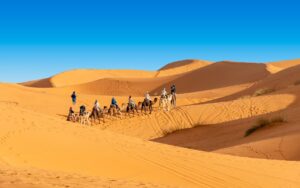
For most visitors, arriving at the camp involves a 45-minute to 1-hour camel ride timed with sunset. Riding single-file through the dunes as the sky turns gold and orange is often the most photographed moment of a Morocco trip.
If preferred, a 4×4 transfer directly to the camp is usually available—ideal for travelers with back issues, young children, or limited time.
Regardless of camp style, the welcome ritual is consistent: a glass of hot mint tea, often with dates or almonds, served as staff escort you to your tent. This reflects genuine Moroccan hospitality and is a good time to ask about the evening’s schedule.
Tent types vary by camp category:
If comfort is important, check these details before booking, as “luxury bivouac” varies by operator.
Dinner is usually served in a communal dining tent and features Moroccan classics such as tagine, couscous, seasonal vegetables, fresh bread, and Moroccan soups, often followed by fruit or traditional desserts. Meals are typically prepared on-site using wood fires or gas stoves.
Vegetarian and other dietary requests are generally accommodated if mentioned in advance.
After dinner, Berber staff often gather around a campfire with traditional drums called tbels for an informal music session. It’s relaxed, not staged, and guests are usually invited to join.
A major highlight is stargazing. With almost no light pollution, the Sahara sky reveals the Milky Way vividly. The clear, dry desert air offers excellent visibility year-round, with winter nights providing the sharpest views.
Temperature swings are often surprising for first-timers. Desert days can be hot, but nights cool down significantly—even in summer. Winter nights can be quite cold. Most camps provide extra blankets, and luxury tents may have heating options in colder months. Packing a warm layer, even in July, is advisable.
Silence is another defining feature. After the fire and any generators quiet down, the desert is remarkably still—a deeply relaxing contrast, though it may be unsettling for light sleepers unused to complete quiet.
Waking up early for sunrise is highly recommended. Climbing a nearby dune before breakfast offers stunning views of the desert bathed in orange and purple light, usually with fewer crowds than at sunset.
Breakfast typically includes fresh bread, honey, olive oil, fruit, and coffee or mint tea. Afterward, travelers return to Merzouga by camel or 4×4.
Some camps offer optional morning activities like sandboarding down the dunes before the heat of the day sets in.
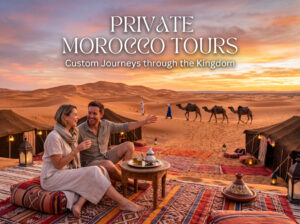
One night is the standard stay, offering the full experience of sunset, dinner, stargazing, and sunrise.
Some travelers choose to stay two nights, especially at remote camps like Erg Chigaga, to enjoy more downtime and a second sunset without travel days on either side.
For tight schedules, a shorter bivouac from Merzouga can still provide the essential moments: camel ride, dinner, and stars, without an overnight stay.
A night in a Sahara bivouac is more than a photo opportunity—it’s a genuine shift in pace where the evening’s highlight is watching the sky’s colors fade and the stars emerge.
Whether staying in a simple Berber camp or a private luxury tent, the core experience is consistent: mint tea, a camel ride, a fire under the stars, and an unforgettable sunrise.
If visiting Morocco, it’s worth allowing enough time to truly slow down and savor this unique desert experience.
Yes, one night is enough to enjoy the full experience — camel trek, dinner, campfire, stargazing, and sunrise. Travelers who want more downtime or a second sunset, especially at remote camps like Erg Chigaga, sometimes extend to two nights.
It depends on the camp category. Traditional or standard bivouacs usually have shared bathroom facilities, while luxury camps typically offer private en-suite tents with running water and, in some cases, air conditioning or heating.
Both are common. A camel trek at sunset is the classic, most photographed way to arrive and takes about 45 minutes to an hour. A 4×4 transfer is a faster, more comfortable alternative for travelers with mobility issues, young children, or limited time.
October to April offers the most comfortable daytime temperatures. Summer (June–August) can be very hot during the day, though desert nights remain more bearable than many travelers expect.
Yes, dinner and breakfast are almost always included in overnight camp packages, typically featuring Moroccan dishes like tagine, couscous, and fresh bread prepared on-site.
Yes, especially during peak season (October–April) and around holidays, as popular camps near Merzouga can sell out. Booking a few weeks ahead is generally recommended.
Overnight Camel Trekking Merzouga
Feel free to ask us any questions.
 +212 661-414956